Campaigns at Nordstrom
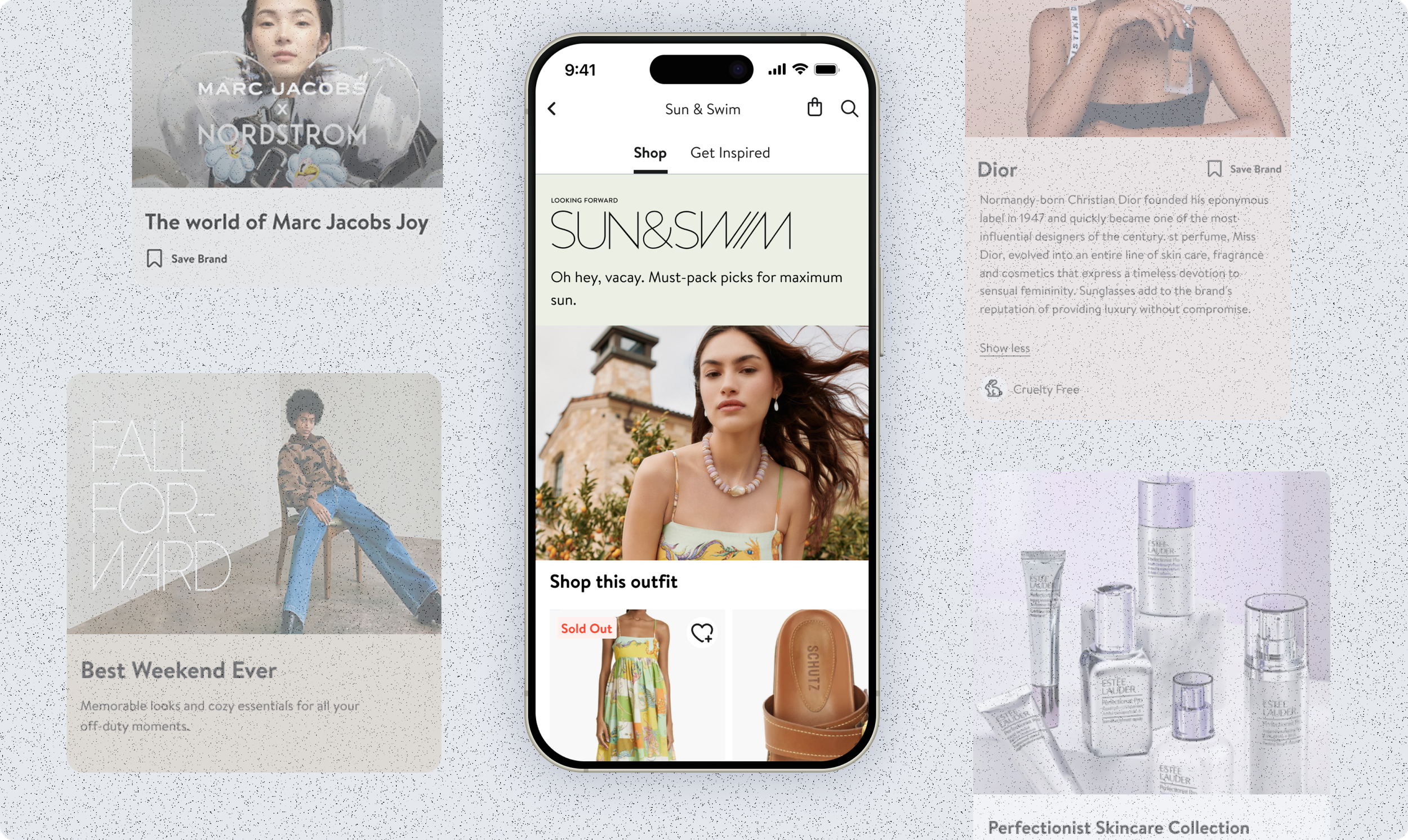
Redesigned Nordstrom’s campaign experience to improve product relevance and customer engagement.
Previous manually built pages often showed irrelevant results, eroding trust. I led a redesigned Nordstrom’s campaign experience to make shopping easier, more personal, and inspiring through targeted, data-driven campaigns.
Launched 2024
Who I worked with
Researcher
Analytics
UX Writer
DLS team (Design Language System)
Creative Director
Marketing
PMs
Engineering Manager
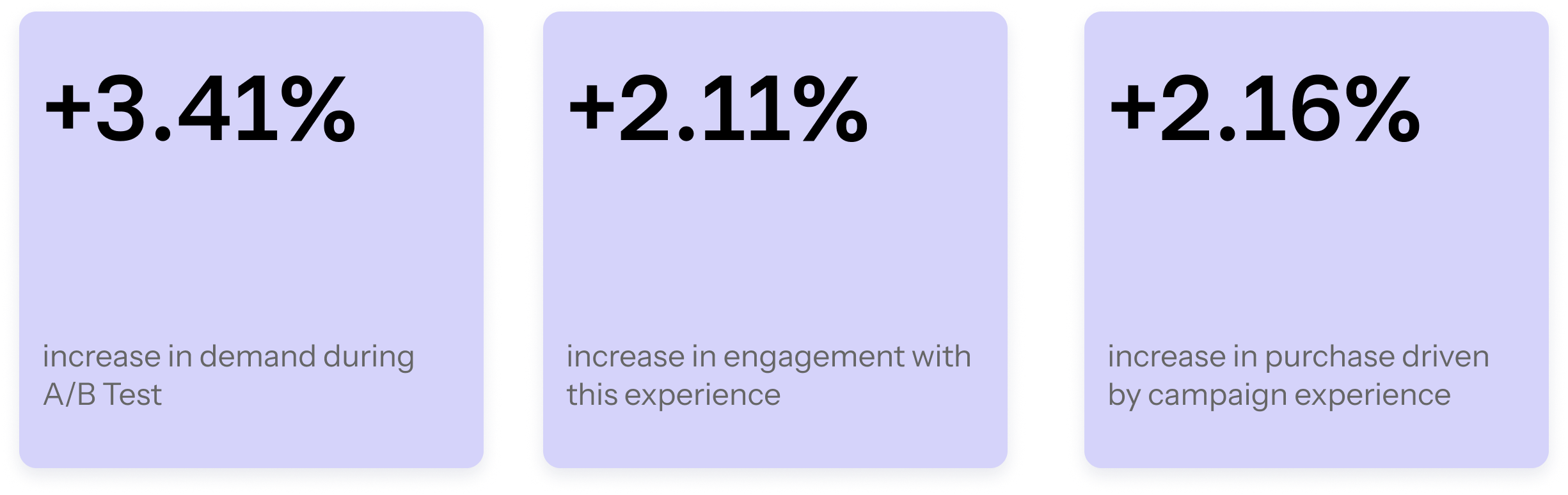
Results from 5M+ highly engaged customers
What led us to redesign campaigns experience?
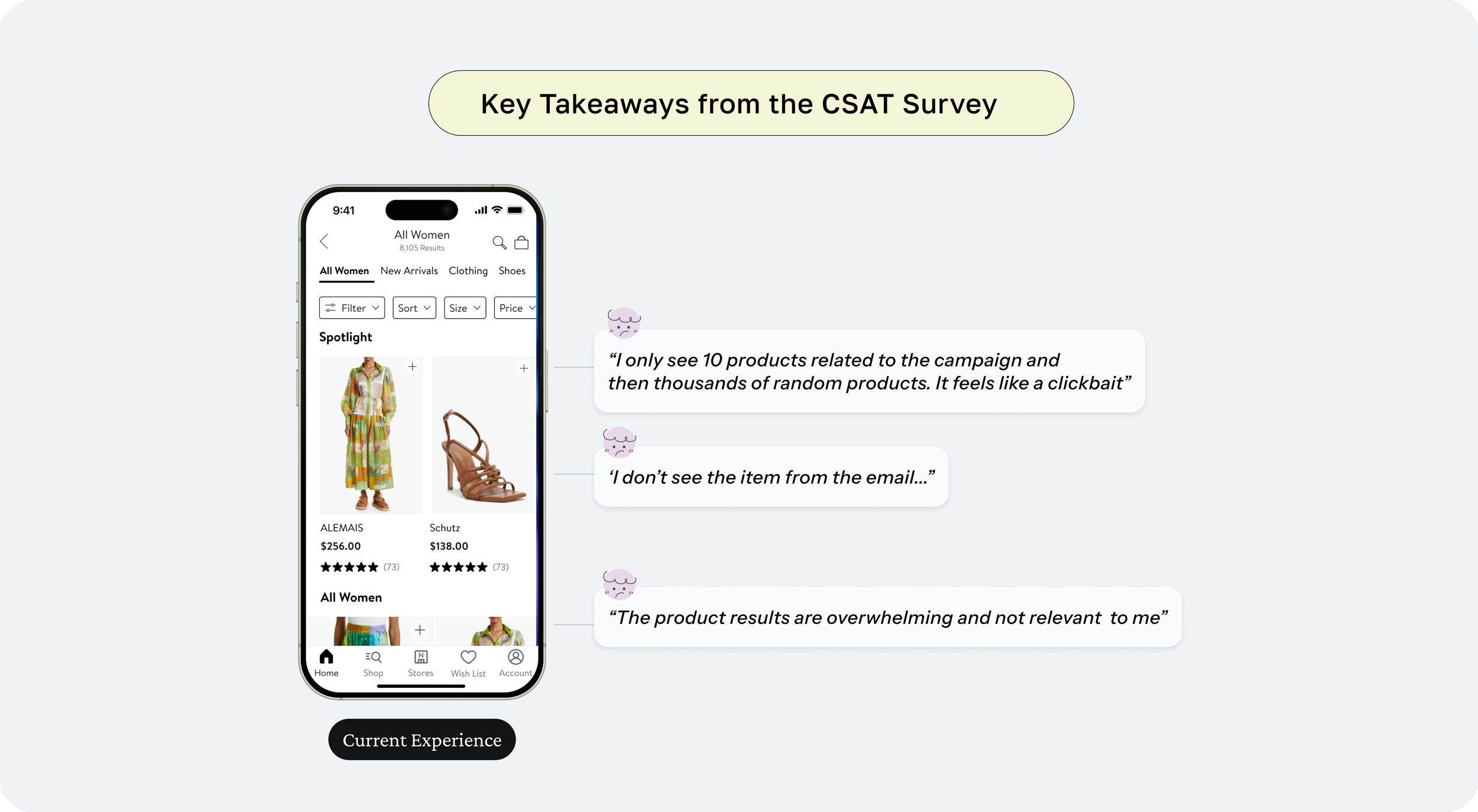
The manual and resource-intensive process of creating campaign landing pages limits our ability to provide an ideal campaign experiences
For customers: Disconnected experience
Customers clicking through marketing emails often land on unsurprising, irrelevant, or broken experiences
For marketers: Limited flexibility
It's a manual process that makes it hard to give customers a smooth and relevant experience. It limits flexibility in content presentation and makes it difficult to connect campaign messaging with dynamic, relevant product sets
Improve campaign experience
Designing a scalable, flexible experience that enables marketers to quickly create relevant, high-quality campaign landing pages while ensuring customers receive seamless, connected journeys from email to onsite discovery
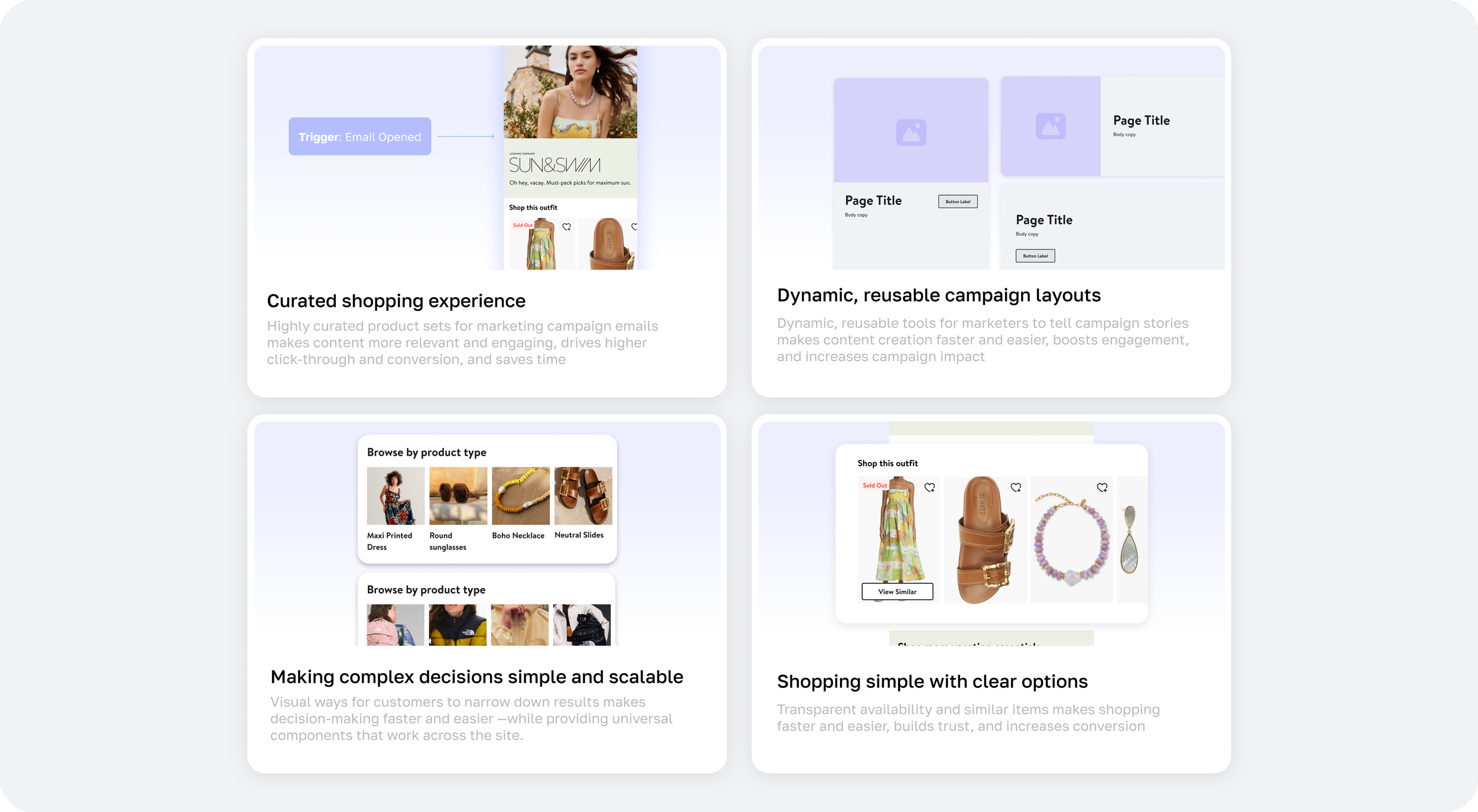
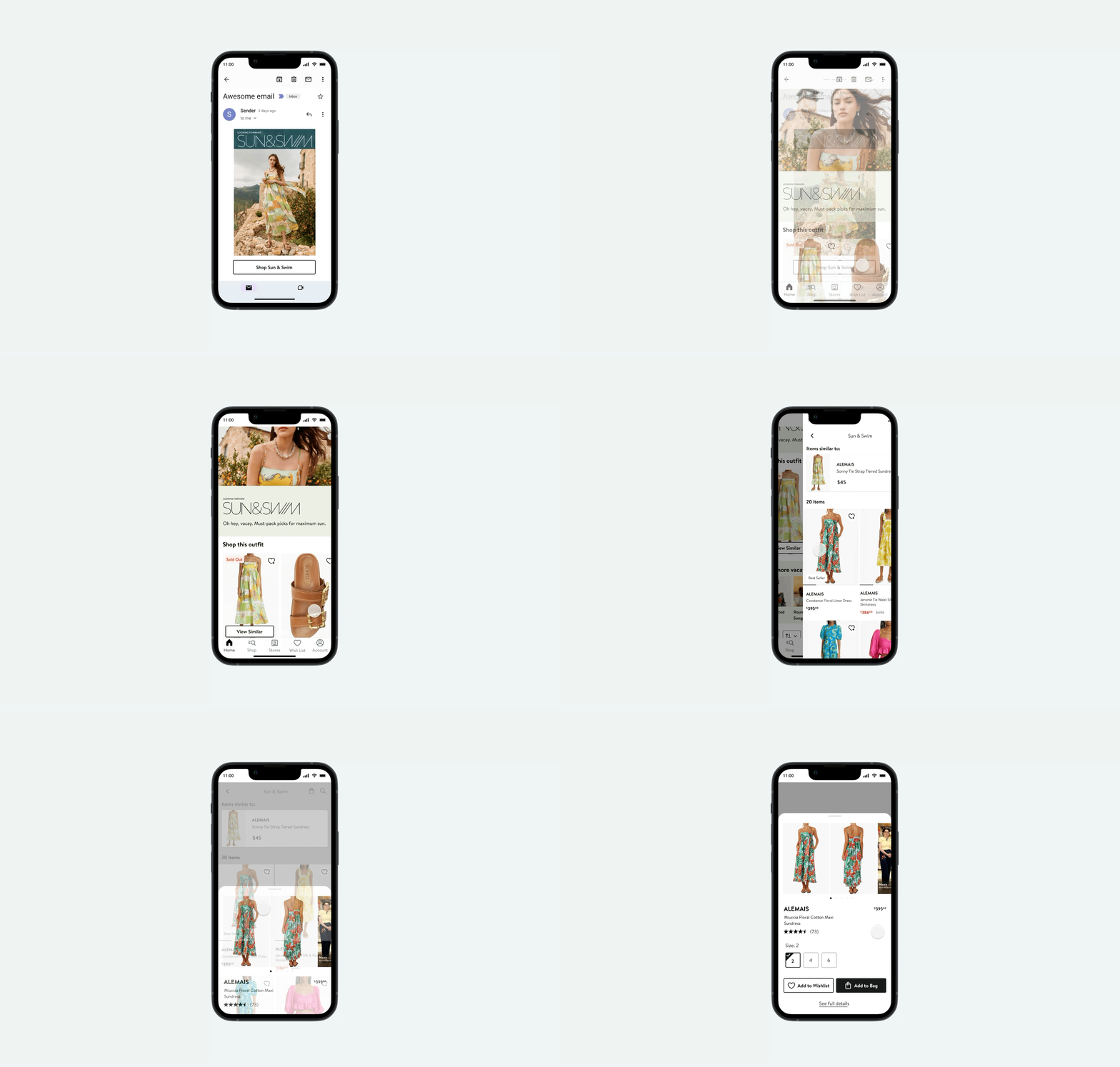
Led the end-to-end design of a scalable campaign page system that replaces fragmented, manual workflows with flexible layouts, smart defaults, and automated product recommendations—allowing marketers to build pages quickly without engineering support.
The experience fixes customer pain points by eliminating disconnected and irrelevant post-click journeys, delivering consistent, contextually aligned pages that improve campaign speed, increase engagement, and enable more personalized campaigns at scale.
Challenges and Solutions
Broad project scope
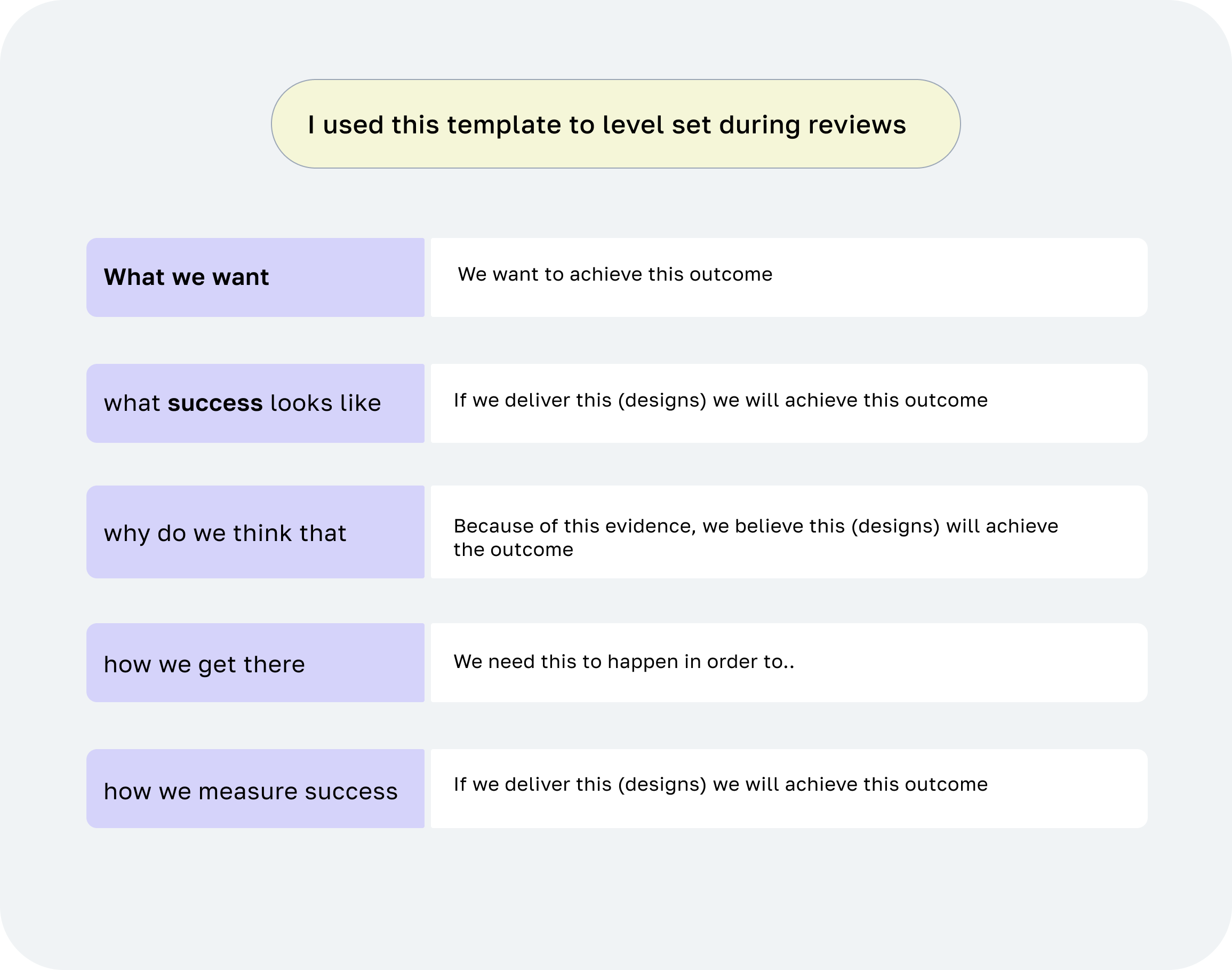
Stakeholders had different ideas of what the success may look like. The project started with a broad scope and unclear definitions of success across teams. I got alignment by running a design workshop with key stakeholders and partnering with marketing and analytics to understand campaign types and performance metrics. This helped us narrow down the goals, define what success looked like, and focus the design on improving product relevance and engagement.
Design for scale not just one-off pages
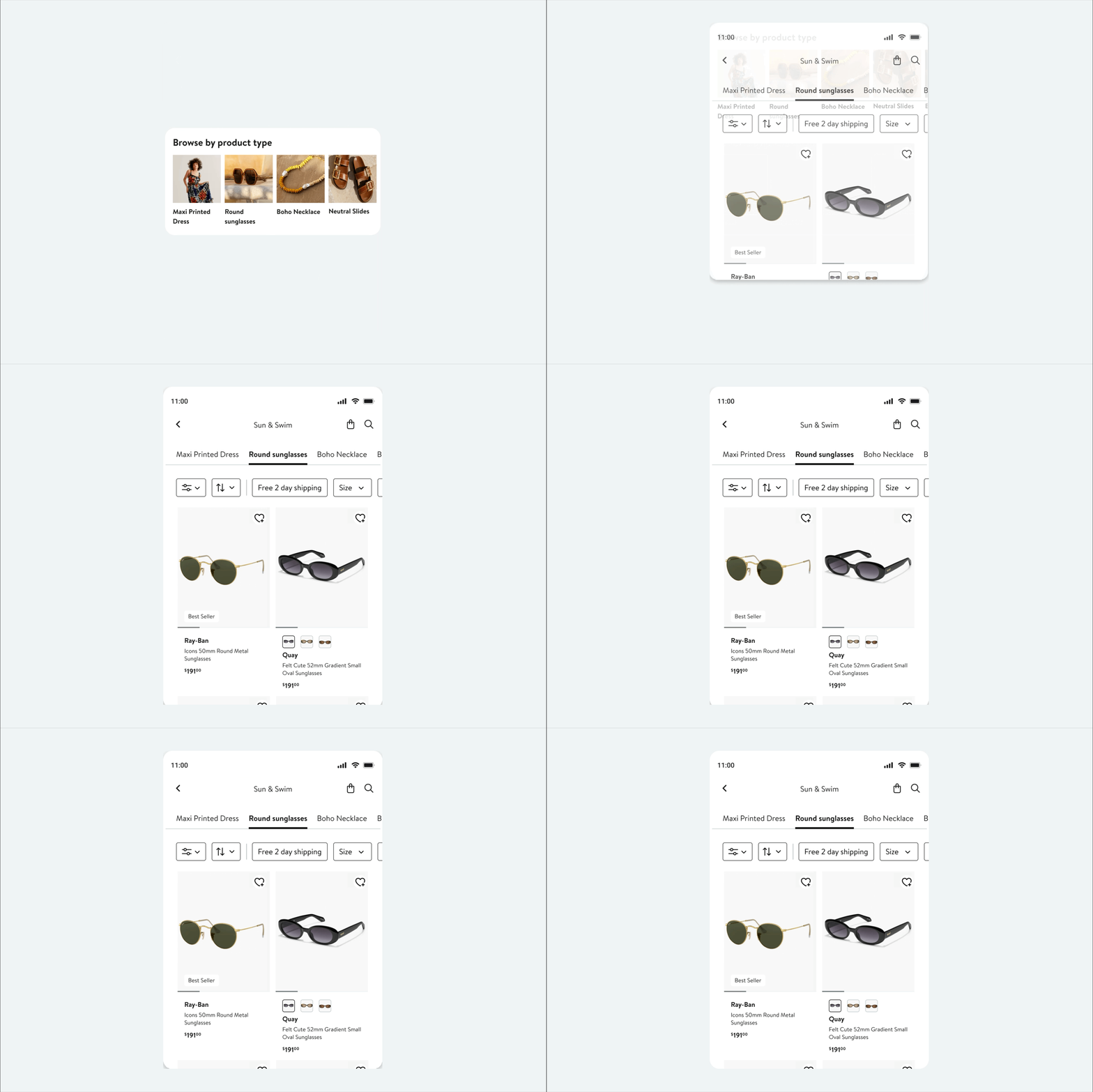
From early customer sentiment, we learned that 33% of people still struggle to find product categories and inspiration, and that filters remain underutilized. This insight guided us to design a flexible, reusable component focused on customer intent, leading to a scalable feature that empowers users to quickly find what matters most by contextually filtering overwhelming search results into relevant product choices.
Turning Limited Creative Assets Into Standardized Components
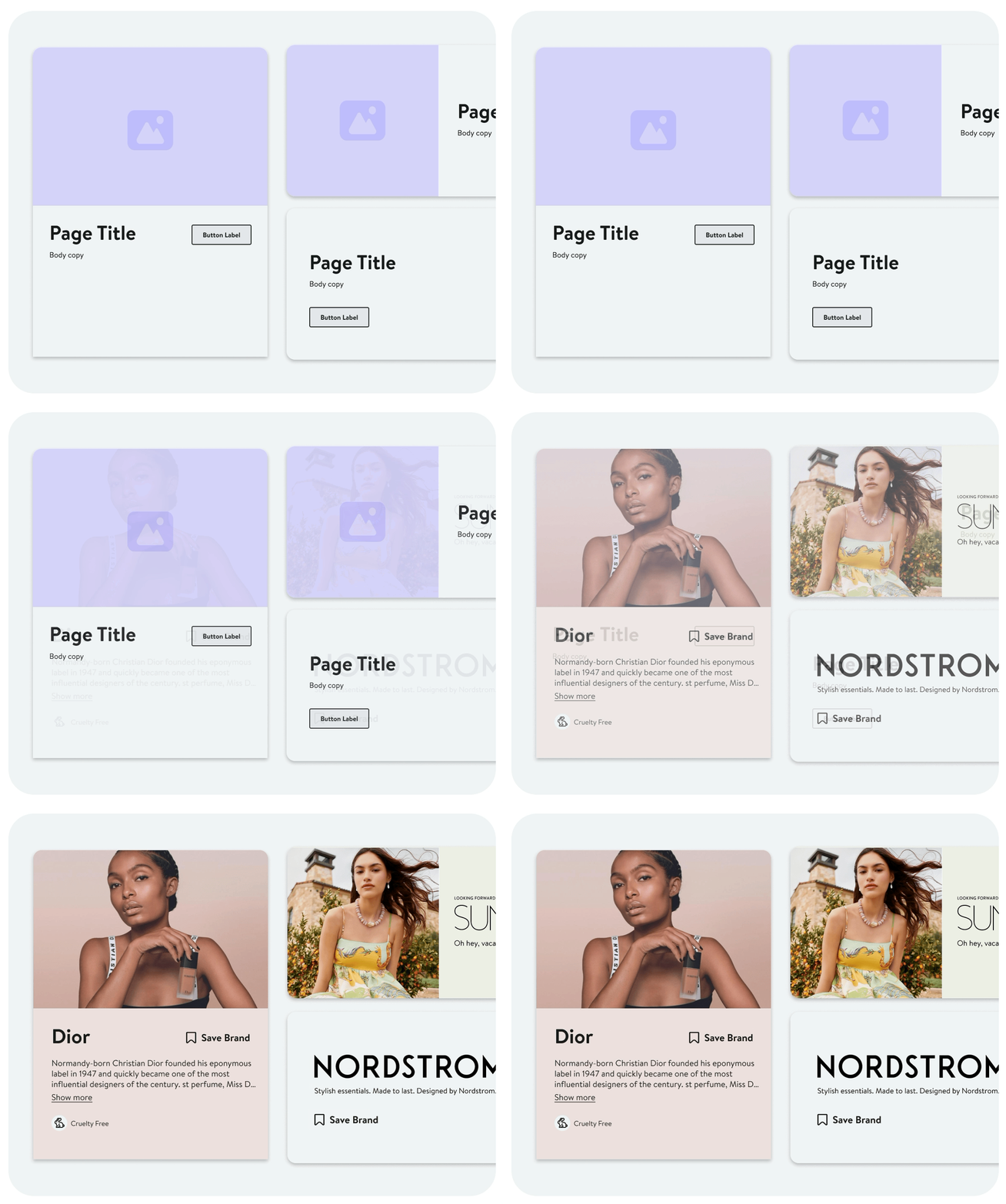
I worked around the aspect ratio limitations of received assets when displaying content on screen. Partnering with the creative team, I used these constraints to define specifications for layout, spacing, and behavior across platforms. These specifications are also designed for marketers to use as building blocks, enabling scalability and reducing manual work
Learnings and Next Steps
To build on prior learnings by scaling campaigns, standardizing components, and refining size and fit after initial testing
Building on prior success, we’ll focus on continuously improving the experience by scaling campaign structures, standardizing reusable components, and addressing size and fit challenges after testing with one campaign type out of 10+ types.